
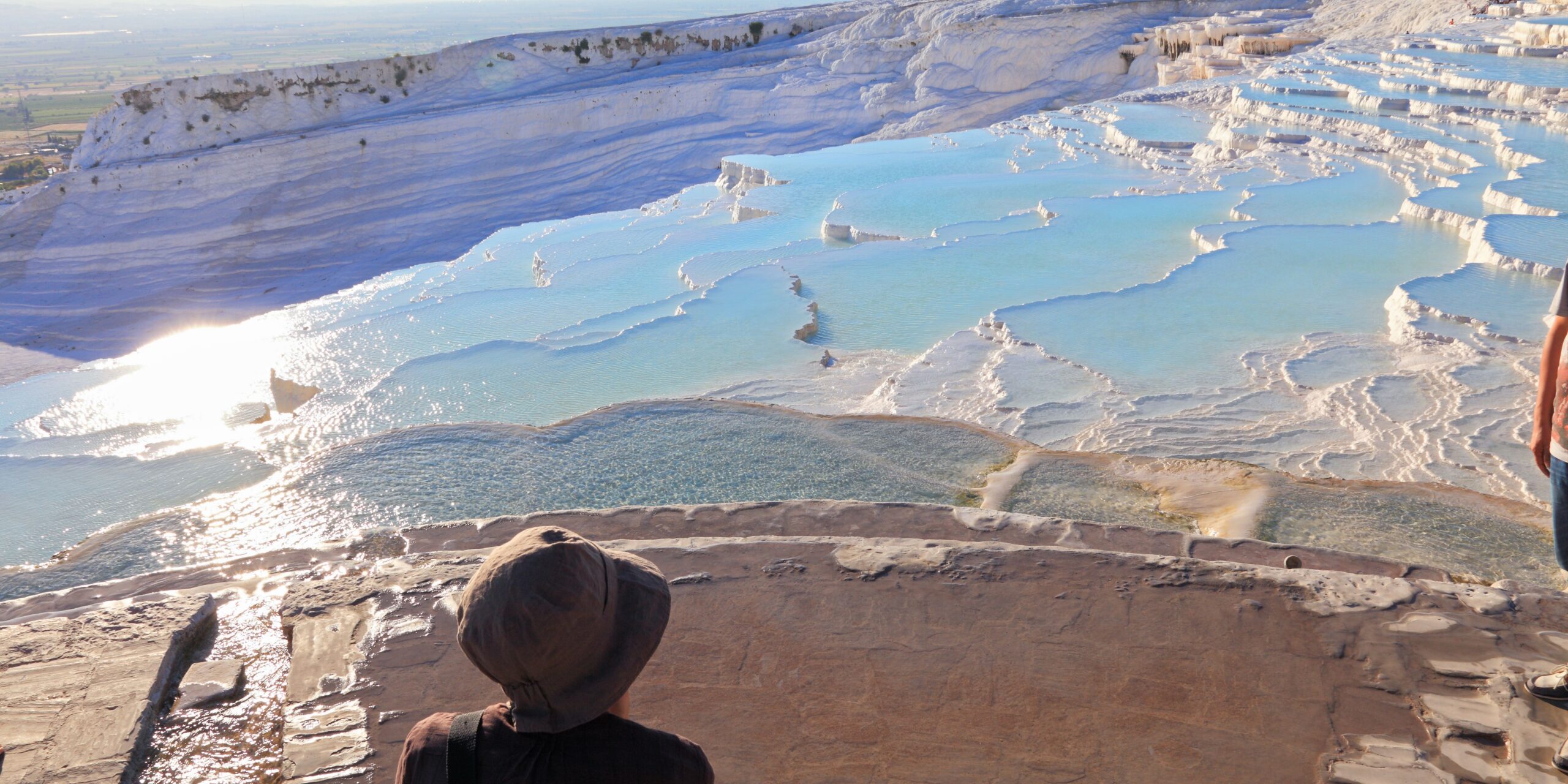
Pamukkale is open all year, and there is no month when it is not worth seeing. But the experience changes a lot between January and August — the light, the crowds, the temperature of the air against the warm water, and even whether balloons can fly. Here is what each part of the year actually feels like, so you can pick the timing that suits the trip you want.
The Short Answer
If you want the best balance of comfortable weather and manageable crowds, come in late April to early June or mid-September to late October. Those are the two windows where you can walk the travertines without the midday heat and still get long, bright days.
Spring: April, May and Early June
This is our favourite season and the one we recommend most often. Daytime temperatures are warm without being punishing, the surrounding countryside is green, and the light in the early morning and late afternoon is beautiful for photographs. Wildflowers come out across the valley, which makes a balloon flight particularly rewarding.
Spring can bring the occasional rainy day, and rain matters more than usual here: the travertine surface becomes slippery and balloon flights may be postponed. It is not a reason to avoid spring, just a reason to keep your plans slightly flexible.
Summer: Late June, July and August
Summer is the busiest season and the hottest. Inland Aegean Turkey gets genuinely hot in midsummer, and there is very little shade on the terraces or among the ruins of Hierapolis. The white surface reflects sunlight straight back at you, which makes it feel hotter still.
Summer is far from ruined, though — you just need to organise the day differently:
- Visit the terraces early in the morning or in the last hours before sunset.
- Keep the middle of the day for something indoors, shaded or in water.
- Carry more water than you think you need, and wear a hat and sunscreen.
- Book a sunrise balloon flight — at that hour the air is cool and still.
Summer is also when you should book ahead. Popular activities fill up, particularly around weekends and public holidays.
Autumn: September and October
September still feels like summer but with fewer people, and October is one of the most pleasant months of the whole year here. The heat drops to a comfortable level, the sky stays clear, and the crowds thin out noticeably once the European school holidays end. If you only have one week in Turkey and you can choose when to take it, October is a very good answer.
Winter: November to March
Winter in Pamukkale is underrated. The site is quiet, prices across the region are lower, and there is something genuinely strange and lovely about standing in warm mineral water on a cold morning with steam rising around you. On clear winter days the contrast between the white terraces, the blue pools and the snow on distant hills is striking.
The trade-offs are real, though. Days are short, so you have fewer daylight hours to work with. Rain and fog are more likely, which means a higher chance of a balloon flight being postponed. And it is cold before sunrise — properly cold — so if you are flying, bring a warm jacket and gloves.
Choosing the Right Time of Day
The month matters, but the hour matters just as much. Most tour groups arrive in the middle of the day, which is both the hottest and the most crowded time on the terraces. Early morning and late afternoon are calmer and much better for photographs — the low sun brings out the texture of the travertine and turns the pools warm colours.
Remember that you must walk on the travertines barefoot; this protects the surface. The stone is rough in places and the water is warm, so it is a pleasant walk rather than an uncomfortable one, but it is worth having a bag for your shoes.
How Many Days Do You Need?
One full day is enough to see the travertines and Hierapolis properly. Two days lets you add a sunrise balloon flight without rushing anything. Three or more days opens up the wider region — the ancient city of Ephesus, the marble streets of Aphrodisias, Laodicea and Kaklık Cave, or the bright turquoise water of Salda Lake, all of which work as day trips from Pamukkale.
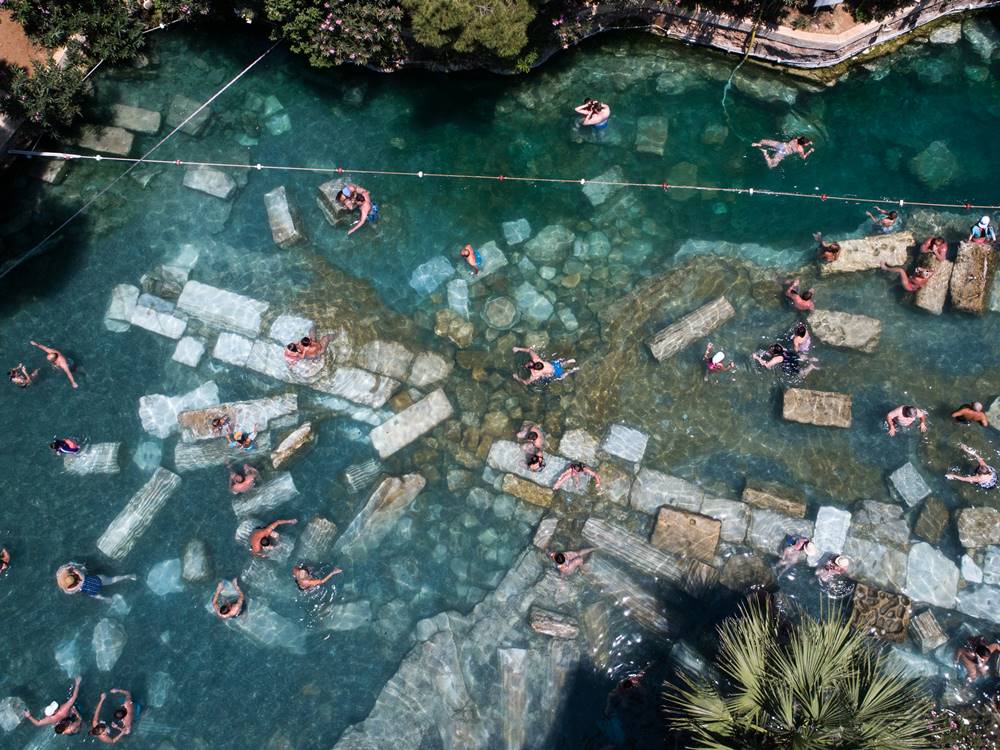
If you are planning your first visit, a guided Pamukkale City Tour covers the terraces, Hierapolis and Cleopatra’s Pool in one organised day, and a sunrise balloon flight is the single most memorable thing most people do here.
Planning Your Dates With Us
Tell us roughly when you are coming and what you would like to see, and we will tell you honestly what is realistic for those dates — including whether the weather that week is likely to affect a balloon flight. There is no payment on our website: you send a reservation request, we confirm the details with you, and you pay on the day of your tour.